
 Image 1 of 1
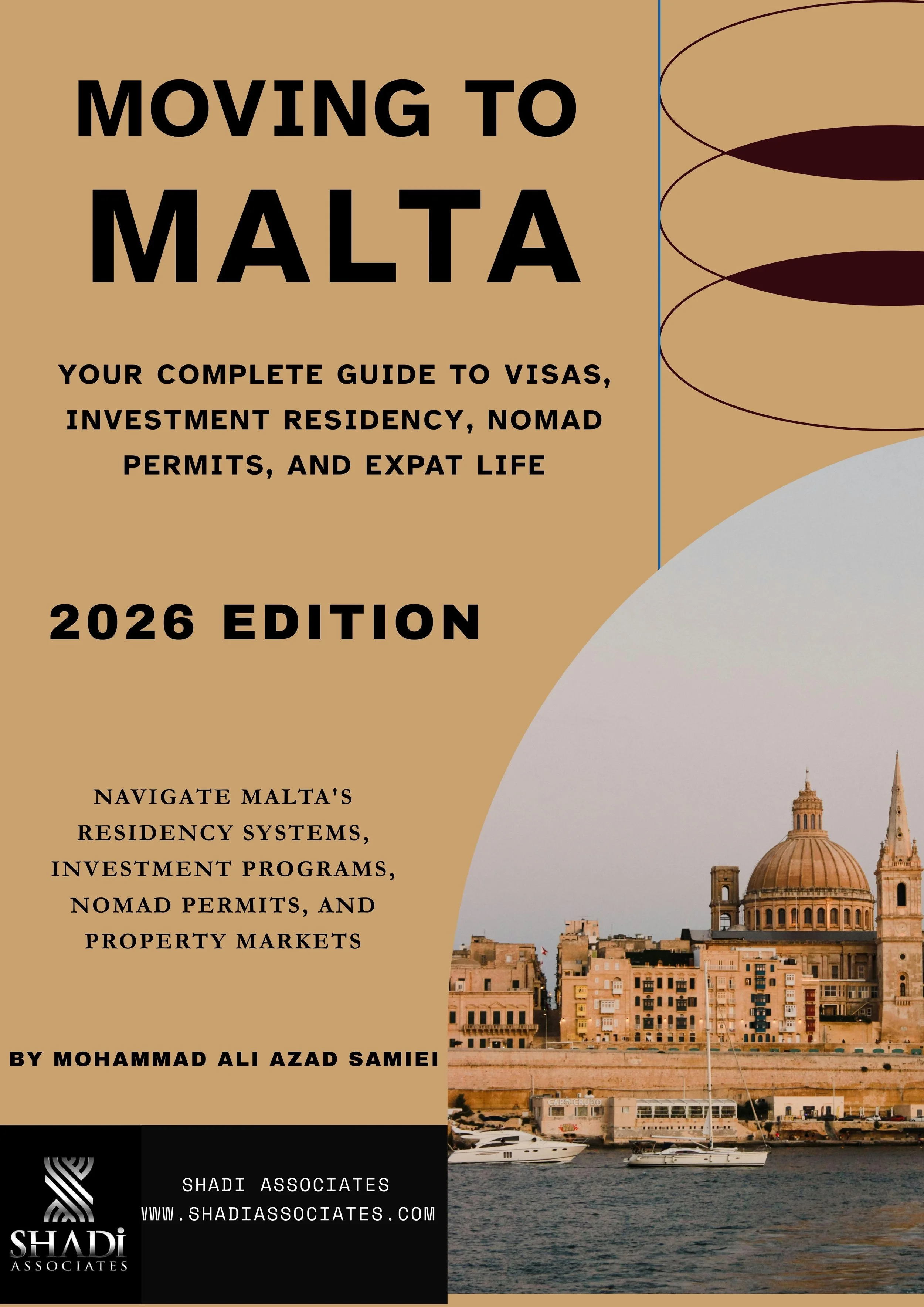
Moving to Malta 2026: Your Complete Guide to Visas, Investment Residency, Nomad Permits & Expat Life
Planning to move to Malta? This 2026 guide explains the country’s principal residence pathways, including permanent residence through the MPRP, the Nomad Residence Permit, employment, family and study routes, special tax programmes, property requirements, healthcare, banking and the practical differences between Malta and Gozo.
Malta combines EU and Schengen membership with an English-speaking business environment, Mediterranean island living, investment-based permanent residence, remote-work options and several specialist residence and tax programmes. However, applicants must navigate different agencies, extensive due-diligence requirements, financial and property conditions, tax considerations and strict document-verification procedures.
This guide provides a structured explanation of Malta’s principal systems, practical requirements and the issues that should be examined before applying, relocating, working remotely, retiring or purchasing property.
What’s Inside:
Malta’s Principal Residence Pathways
The Malta Permanent Residence Programme, Nomad Residence Permit, employment-based Single Permit, family reunification, student residence, EU-national residence documentation and specialist residence and tax programmes.Malta Permanent Residence Programme
Eligibility for qualifying third-country nationals, the current €375,000 property-purchase or €14,000 annual rental requirement, administration fees, government contributions, donation and asset requirements, eligible dependants, due diligence and the mandatory use of a licensed agent.Nomad Residence Permit
Eligibility for third-country nationals employed by foreign organisations, partners or shareholders of foreign companies and qualifying freelancers or consultants serving foreign clients, together with the current €42,000 gross annual income requirement, health insurance, accommodation, background checks and renewal planning.Employment and Single-Permit Residence
Employer-sponsored residence and work permission, Jobsplus and Identità procedures, labour-market requirements, documentation, salary and qualification considerations, permit renewal and the implications of changing or losing employment.Global Residence Programme
The special tax-status framework for people who are not EU, EEA or Swiss nationals, qualifying-property requirements, minimum tax obligations, insurance and resource requirements, authorised representation and the distinction between tax status and immigration permission.Residence Programme for EU, EEA and Swiss Nationals
The separate special tax programme available to qualifying EU, EEA and Swiss nationals, its property and tax conditions and how it differs from the Global Residence Programme.Retirement and Other Specialist Programmes
The Malta Retirement Programme and other specialist frameworks, including eligibility, pension and property considerations, minimum tax requirements and the need for qualified Maltese tax advice before choosing a programme.Tax Residence and Non-Domiciled Status
The distinction between residence and domicile, Malta-source income, foreign income remitted to Malta, foreign capital, minimum-tax obligations under specialist programmes and why individual tax treatment must be confirmed with a qualified Maltese tax professional.Property Requirements and Transactions
Buying or renting qualifying property, differences between programme-specific and ordinary property requirements, preliminary agreements, notarial procedures, title verification, acquisition permits where applicable, registration, taxes, fees and ongoing ownership obligations.Malta and Gozo Property Markets
Differences in supply, pricing, rental demand, transport, services and resale liquidity between the main island and Gozo, together with the risks of selecting property solely to satisfy a residence programme.Residence Cards and Institutional Records
Identità residence documentation, Residency Malta procedures, address registration, tax identification, lease records and the importance of maintaining consistent information across government, healthcare, banking and utility systems.Healthcare Access and Insurance
Public-healthcare eligibility, employment and social-security connections, private insurance requirements for certain residence categories, European healthcare coordination and the documentation needed to demonstrate appropriate coverage.Banking and Financial Verification
Identification, address and tax-residence requirements, source-of-funds and source-of-wealth checks, anti-money-laundering procedures, differences between personal and business accounts and why a residence card does not guarantee that a bank account will be approved.Due Diligence and Application Preparation
Police-clearance certificates, financial evidence, source-of-funds documentation, corporate and employment records, health insurance, accommodation evidence, certified translations and the enhanced verification applied to investment and specialist programmes.Family Members and Dependants
Which family members may qualify under different residence categories, dependency evidence, age and financial-support considerations, healthcare coverage and the difference between inclusion under MPRP, Nomad, employment and ordinary family-reunification routes.Malta vs Gozo: Daily Life
Population density, employment and business access, international schools, healthcare, public transport, ferry dependence, seasonal pressure, tourism, housing and the practical differences between urban Malta and quieter Gozo.Long-Term Planning
Permit renewals, maintaining programme conditions, property-retention periods, employment changes, tax compliance and the distinction between temporary residence, permanent residence, long-term resident status and citizenship. Residence or investment does not automatically provide Maltese citizenship.Common Mistakes
Confusing a special tax programme with immigration permission, using outdated MPRP costs, applying under the wrong nationality-based programme, underestimating due diligence, selecting unsuitable property, providing inconsistent financial records and assuming that residence approval guarantees banking or tax outcomes.
This is independent analytical guidance, not legal, tax, financial, investment, immigration or citizenship advice. The guide explains Malta’s institutional frameworks and practical administrative systems based on official requirements and operational conditions current at the time of publication. Programme conditions, financial thresholds, tax treatment and procedures can change, and specialist matters should be confirmed with the appropriate Maltese authority or qualified professional.
Perfect for third-country nationals considering the MPRP, remote workers evaluating the Nomad Residence Permit, EU and non-EU applicants examining specialist tax programmes, employed professionals, retirees, families, property purchasers and anyone evaluating Malta or Gozo as a potential place to live or invest.
Author: Mohammad Ali Azad Samiei (MPhil Social Anthropology, MBA, Fulbright Scholar)
Published by: SHADi Associates
Planning to move to Malta? This 2026 guide explains the country’s principal residence pathways, including permanent residence through the MPRP, the Nomad Residence Permit, employment, family and study routes, special tax programmes, property requirements, healthcare, banking and the practical differences between Malta and Gozo.
Malta combines EU and Schengen membership with an English-speaking business environment, Mediterranean island living, investment-based permanent residence, remote-work options and several specialist residence and tax programmes. However, applicants must navigate different agencies, extensive due-diligence requirements, financial and property conditions, tax considerations and strict document-verification procedures.
This guide provides a structured explanation of Malta’s principal systems, practical requirements and the issues that should be examined before applying, relocating, working remotely, retiring or purchasing property.
What’s Inside:
Malta’s Principal Residence Pathways
The Malta Permanent Residence Programme, Nomad Residence Permit, employment-based Single Permit, family reunification, student residence, EU-national residence documentation and specialist residence and tax programmes.Malta Permanent Residence Programme
Eligibility for qualifying third-country nationals, the current €375,000 property-purchase or €14,000 annual rental requirement, administration fees, government contributions, donation and asset requirements, eligible dependants, due diligence and the mandatory use of a licensed agent.Nomad Residence Permit
Eligibility for third-country nationals employed by foreign organisations, partners or shareholders of foreign companies and qualifying freelancers or consultants serving foreign clients, together with the current €42,000 gross annual income requirement, health insurance, accommodation, background checks and renewal planning.Employment and Single-Permit Residence
Employer-sponsored residence and work permission, Jobsplus and Identità procedures, labour-market requirements, documentation, salary and qualification considerations, permit renewal and the implications of changing or losing employment.Global Residence Programme
The special tax-status framework for people who are not EU, EEA or Swiss nationals, qualifying-property requirements, minimum tax obligations, insurance and resource requirements, authorised representation and the distinction between tax status and immigration permission.Residence Programme for EU, EEA and Swiss Nationals
The separate special tax programme available to qualifying EU, EEA and Swiss nationals, its property and tax conditions and how it differs from the Global Residence Programme.Retirement and Other Specialist Programmes
The Malta Retirement Programme and other specialist frameworks, including eligibility, pension and property considerations, minimum tax requirements and the need for qualified Maltese tax advice before choosing a programme.Tax Residence and Non-Domiciled Status
The distinction between residence and domicile, Malta-source income, foreign income remitted to Malta, foreign capital, minimum-tax obligations under specialist programmes and why individual tax treatment must be confirmed with a qualified Maltese tax professional.Property Requirements and Transactions
Buying or renting qualifying property, differences between programme-specific and ordinary property requirements, preliminary agreements, notarial procedures, title verification, acquisition permits where applicable, registration, taxes, fees and ongoing ownership obligations.Malta and Gozo Property Markets
Differences in supply, pricing, rental demand, transport, services and resale liquidity between the main island and Gozo, together with the risks of selecting property solely to satisfy a residence programme.Residence Cards and Institutional Records
Identità residence documentation, Residency Malta procedures, address registration, tax identification, lease records and the importance of maintaining consistent information across government, healthcare, banking and utility systems.Healthcare Access and Insurance
Public-healthcare eligibility, employment and social-security connections, private insurance requirements for certain residence categories, European healthcare coordination and the documentation needed to demonstrate appropriate coverage.Banking and Financial Verification
Identification, address and tax-residence requirements, source-of-funds and source-of-wealth checks, anti-money-laundering procedures, differences between personal and business accounts and why a residence card does not guarantee that a bank account will be approved.Due Diligence and Application Preparation
Police-clearance certificates, financial evidence, source-of-funds documentation, corporate and employment records, health insurance, accommodation evidence, certified translations and the enhanced verification applied to investment and specialist programmes.Family Members and Dependants
Which family members may qualify under different residence categories, dependency evidence, age and financial-support considerations, healthcare coverage and the difference between inclusion under MPRP, Nomad, employment and ordinary family-reunification routes.Malta vs Gozo: Daily Life
Population density, employment and business access, international schools, healthcare, public transport, ferry dependence, seasonal pressure, tourism, housing and the practical differences between urban Malta and quieter Gozo.Long-Term Planning
Permit renewals, maintaining programme conditions, property-retention periods, employment changes, tax compliance and the distinction between temporary residence, permanent residence, long-term resident status and citizenship. Residence or investment does not automatically provide Maltese citizenship.Common Mistakes
Confusing a special tax programme with immigration permission, using outdated MPRP costs, applying under the wrong nationality-based programme, underestimating due diligence, selecting unsuitable property, providing inconsistent financial records and assuming that residence approval guarantees banking or tax outcomes.
This is independent analytical guidance, not legal, tax, financial, investment, immigration or citizenship advice. The guide explains Malta’s institutional frameworks and practical administrative systems based on official requirements and operational conditions current at the time of publication. Programme conditions, financial thresholds, tax treatment and procedures can change, and specialist matters should be confirmed with the appropriate Maltese authority or qualified professional.
Perfect for third-country nationals considering the MPRP, remote workers evaluating the Nomad Residence Permit, EU and non-EU applicants examining specialist tax programmes, employed professionals, retirees, families, property purchasers and anyone evaluating Malta or Gozo as a potential place to live or invest.
Author: Mohammad Ali Azad Samiei (MPhil Social Anthropology, MBA, Fulbright Scholar)
Published by: SHADi Associates